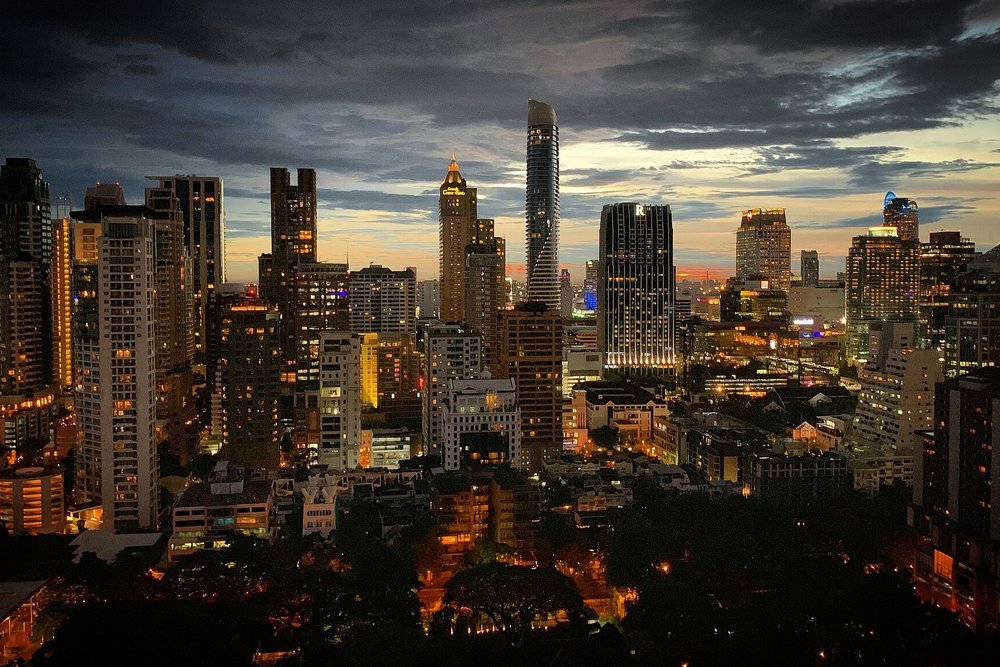
Thailand is one of the largest economies in Southeast Asia and is generally classed as an upper-middle-income country. Its output is unusually diversified for the region, resting on a broad manufacturing base, a large tourism industry, a substantial agricultural sector and a growing services economy. Understanding how these pieces fit together explains both the country's resilience and the risks it faces.
Manufacturing is the heavyweight. Thailand assembles vehicles and makes a wide range of electronics, components, appliances and processed foods, much of it for export. Decades of foreign investment and a deep base of parts suppliers have made the country a key link in regional supply chains, a theme explored separately in our briefing on Thailand as a manufacturing and export hub.
Tourism is the second pillar. Thailand is one of the world's most visited countries, and the money spent by visitors supports hotels, restaurants, transport, retail and a large informal economy. Because tourism touches so many livelihoods, swings in visitor numbers are felt quickly across the wider economy.
Agriculture, though a smaller share of output than it once was, still employs a large number of people, particularly in rural areas. Thailand is a major exporter of rice and other agricultural products, which ties parts of the countryside to global commodity prices and weather patterns.
The economy is highly open, meaning trade and investment flows matter a great deal. That openness has powered growth, but it also means Thailand is exposed to global demand, shifts in supply chains and the decisions of major trading partners across the Asia-Pacific.
Several long-run challenges shape the outlook. Thailand's population is ageing relatively early for its income level, which weighs on the future workforce and public finances. Household debt is widely regarded as high, which can limit consumer spending. And like many middle-income economies, Thailand faces the task of moving up the value chain toward higher-skilled, higher-value activity rather than competing mainly on cost.
For anyone following the country, the useful mental model is a diversified, trade-dependent economy with real strengths in industry and tourism, balanced against demographic and debt pressures. The direction of reform, investment and the global trade environment will determine how smoothly it makes its next transition.